Why is my child struggling?
You know your child is bright, capable, and trying their best.
Yet everyday tasks can seem harder than they should be.
Perhaps they struggle to sit still, focus in class, manage big emotions, coordinate their movements, keep up with learning, or feel confident joining in with their peers. You may have tried different strategies and therapies, but still feel like you're missing the piece that explains why these challenges are happening.
For some children, the answer may lie in their early neurological development.
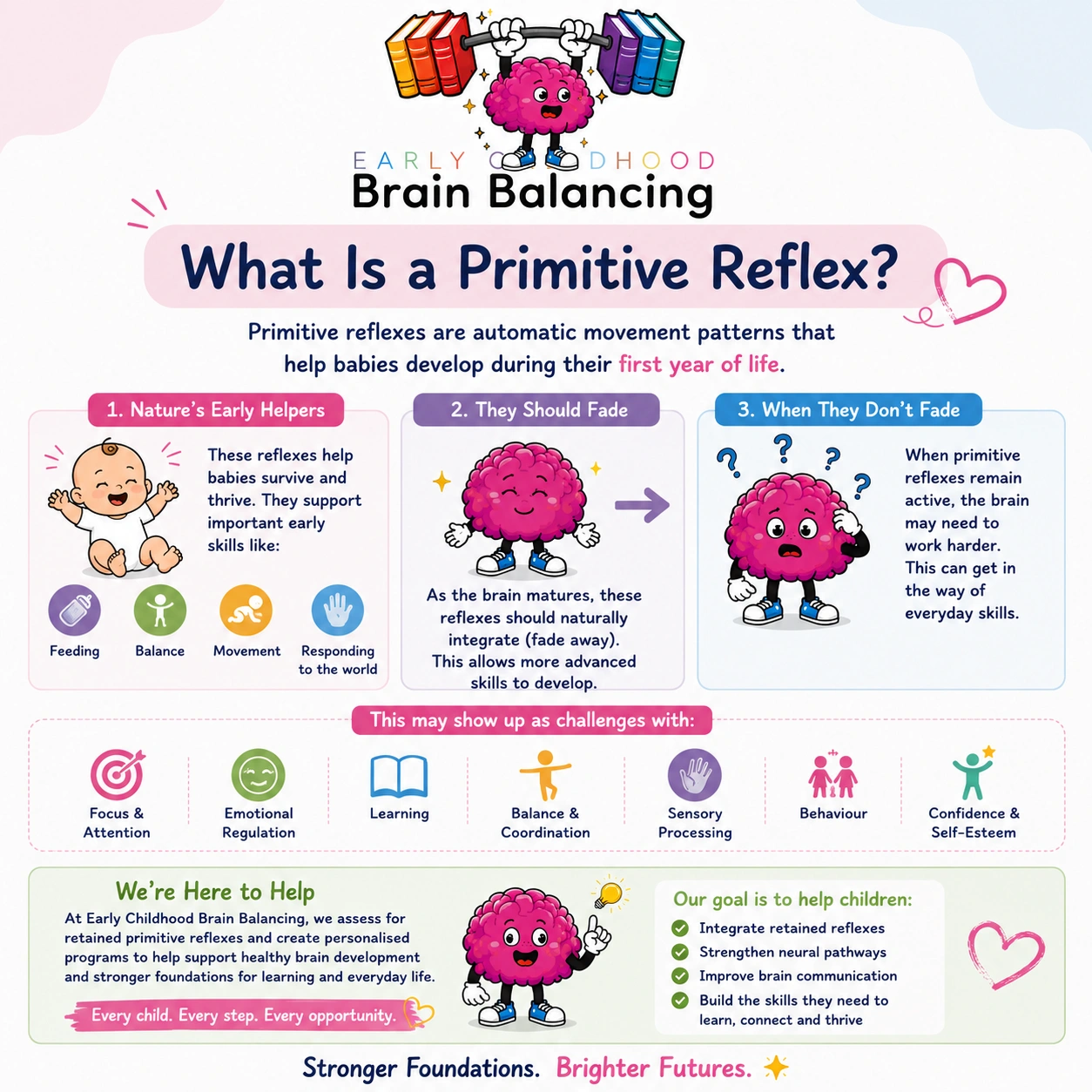
Primitive reflexes are automatic movement patterns that help babies develop during the first years of life. As the brain matures, these reflexes should naturally integrate, allowing higher-level skills such as attention, emotional regulation, coordination, learning, communication, and social engagement to develop.
When these reflexes remain active beyond infancy, they can place extra demands on the developing nervous system. Children may work much harder than their peers to maintain focus, regulate emotions, sit upright, coordinate their bodies, process sensory information, or engage successfully in learning and play.
How Can the Melillo Method Help?
The Melillo Method is a comprehensive, brain-based approach that looks beyond symptoms to understand how your child's brain is developing and functioning.
Through a detailed assessment, we identify developmental imbalances, retained primitive reflexes, and areas of neurological weakness that may be contributing to the challenges your child is experiencing.
Using this information, we create a personalised program of movement, sensory, cognitive, and developmental activities designed specifically for your child.
These activities aim to:
✓ Support the integration of retained primitive reflexes
✓ Strengthen underdeveloped neural pathways
✓ Improve communication between different areas of the brain
✓ Build the foundations needed for learning, behaviour, coordination, and emotional regulation
What Changes Might You See?
As the brain becomes more balanced and efficient, many families report improvements in:
• Focus and attention
• Emotional regulation
• Balance and coordination
• Confidence and self-esteem
• Learning and academic performance
• Communication and social skills
• Participation in sports, play, and everyday activities
Every child is different, and progress looks different for every family. Our goal is to help children build stronger neurological foundations so they can experience greater success, confidence, and enjoyment in everyday life.
Hope Starts Here
When children understand their world more easily, regulate their emotions more effectively, and feel capable in their bodies and minds, school, friendships, family life, and learning can become less of a struggle and more of an opportunity to thrive.
Testimonials
My favourite part of this work is seeing the difference it makes for the whole family. As children become more confident, calm, and regulated, parents often tell me that home life feels easier and everyone can relax a little more.
I love hearing parents share the changes they are noticing—whether it's a child trying something new, managing their emotions better, focusing more at school, or simply feeling happier in themselves. Those conversations are the highlight of my day and remind me why I love what I do.